Mouldings as a Tool for Proportion, Not Decoration
By Team GENESIS · 2026-06-22
Wall mouldings are most convincing when they solve a spatial problem—scale, rhythm, alignment or transition—before they add ornament.
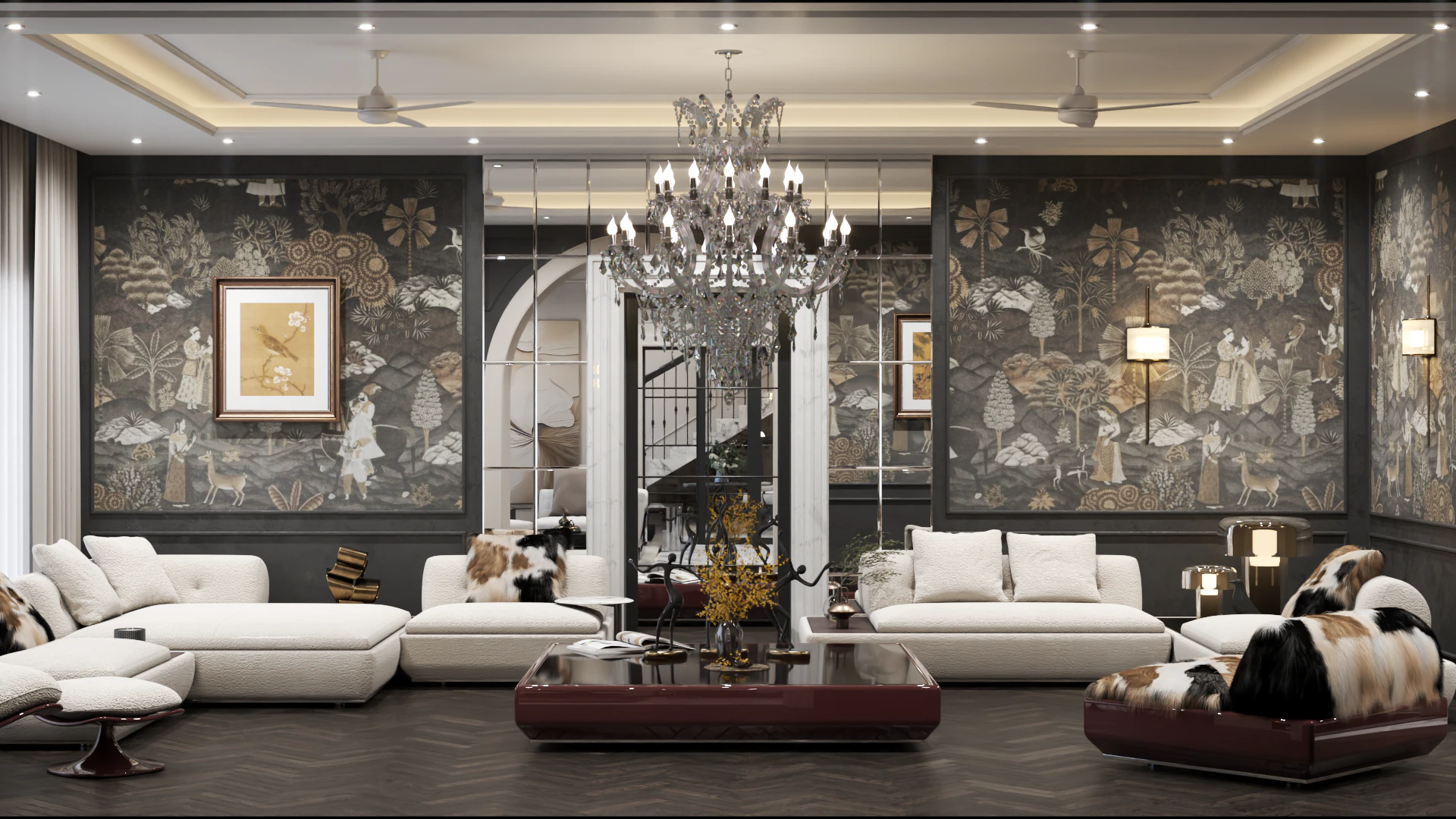
Mouldings can make a tall room feel grounded, give a broad wall a readable rhythm and align doors, furniture and artwork into one composition. These are spatial functions, and they should be established before a profile is selected.
The width of the wall, the height of the skirting and the placement of switches all affect how a panelled surface will read. Small inaccuracies become very visible when repeated across a room, which is why shop drawings and on-site coordination matter.
Paint, timber, plaster and metal each produce a different level of emphasis. A monochromatic wall treatment can remain quiet, while contrast or reflective material makes the detail more graphic. The surrounding furniture should leave enough breathing room for the pattern to remain legible.
When mouldings follow the architecture, they make a room feel resolved. When they are added without a proportion study, they can make even a large room feel busy.
Read more from the Studio GENESIS Journal · Request a consultation